
There is something deeply comforting about the aroma of a chicken roasting in the oven. It is a culinary cornerstone that anchors Sunday dinners, holiday gatherings, and quiet weeknight meals alike. While it may seem intimidating to roast a whole bird, the process is actually one of the most rewarding and straightforward techniques a home cook can master.
This gluten free dinner recipe focuses on the fundamental steps, proper drying, generous seasoning, and temperature control, to ensure your chicken comes out perfectly, every single time.
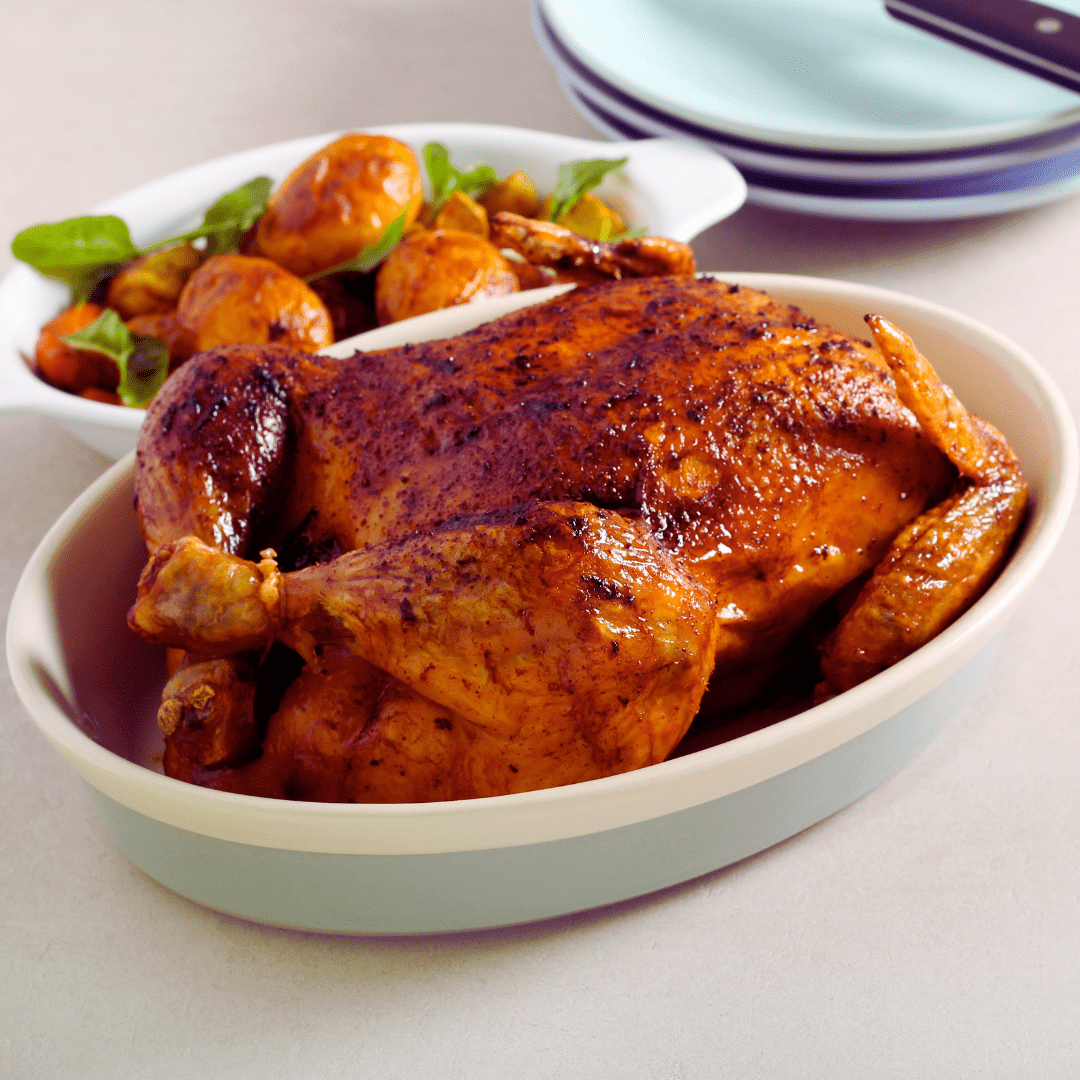
Oven Roasted Chicken Recipe
Ingredients
- 1 whole chicken 3 to 5lbs
- Kosher salt
- Freshly ground black pepper
- 1 yellow onion cut into large pieces
- 3 medium carrots peeled and cut into large pieces
- 2 celery stalks cut into large pieces
- ½ lb. baby potatoes quartered
- 1 head garlic halved
- 1 tbsp. extra-virgin olive oil
- 3 tbsp. melted butter
- 1 lemon
- fresh thyme
- fresh rosemary
- paprika

Instructions
- Pat chicken dry and season all over with salt and pepper.1 whole chicken
- Secure legs together and tuck wing tips under the body of the chicken.
- Preheat oven to 425°.
- Fill a 9"-x-13" baking dish with chopped onions, carrots, celery, potatoes, and garlic and toss together with oil and 1 teaspoon salt & pepper.Kosher salt, 1 yellow onion, 3 medium carrots, 2 celery stalks, 1/2 lb. baby potatoes, 1 head garlic, 1 tbsp. extra-virgin olive oil, Freshly ground black pepper
- Place chicken on top.1 whole chicken
- Brush chicken all over with melted butter and stuff cavity with lemon and most of the thyme, rosemary & paprika, reserving a couple sprigs for garnish.3 tbsp. melted butter, 1 lemon, fresh thyme, fresh rosemary, paprika
- Roast until juices run clear and a meat thermometer inserted into the center of the thigh reads 165°, 50 minutes to 1 hour depending on weight of chicken.
- Tent chicken with foil and let rest 15 to 20 minutes, then transfer to a cutting board and carve.
- Serve.
The Art of the Perfect Roast Chicken
Roasting a whole chicken is a skill that pays dividends. Unlike individual cuts, a whole bird retains its natural juices better and provides a variety of textures and flavours, from the rich dark meat of the thighs to the lean, delicate breast meat. Beyond the initial meal, a roasted chicken serves as a versatile foundation for future dishes, such as soups, salads, and sandwiches.
Selecting Your Bird
The quality of your finished dish begins at the market. When shopping, look for a chicken that is plump with healthy-looking skin. If possible, choose organic or pasture-raised options, as these often have a deeper flavour profile. A standard roasting chicken usually weighs between 3 and 5 pounds; this size is manageable for most roasting pans and ensures even cooking without the exterior drying out before the interior is done.
The Secret to Crispy Skin
The most common question regarding roasted chicken is how to achieve that elusive, shatteringly crisp skin. The enemy of crispiness is moisture. To combat this, always pat the chicken thoroughly dry with paper towels, both inside and out, before adding any fat or seasoning. For even better results, let the chicken sit uncovered in the refrigerator for a few hours (or even overnight) to allow the skin to air-dry completely.
Once dry, a light coating of oil or melted butter acts as a conductor for the heat, helping the skin brown beautifully. Salt is also essential; it draws out remaining moisture and seasons the meat deeply.
Flavouring from the Inside Out
While the skin provides the texture, aromatics provide the soul of the dish. Stuffing the cavity with halved lemons, a head of garlic cut in cross-sections, and fresh herbs like rosemary, thyme, or sage infuses the meat with fragrance as it cooks. These ingredients don’t just add flavour; they release moisture into the cavity, helping to steam the breast meat from the inside while the outside roasts.
Mastering the Technique
Roasting at a consistently high temperature, around 425°F (218°C), is often the preferred method for a quick roast that yields golden skin. However, some prefer starting high and then lowering the temperature to 350°F (175°C) for a more gradual cook. Regardless of the method, using a meat thermometer is the only way to guarantee safety and succulence. The chicken is ready when the thickest part of the thigh reaches 165°F (74°C).
The Importance of Resting
One of the most overlooked steps in cooking meat is the rest period. Once you remove the chicken from the oven, resist the urge to carve it immediately. Let it sit on a cutting board for at least 15 to 20 minutes. This allows the juices to redistribute throughout the meat. If you cut into it too early, those juices will run out onto the board, leaving you with dry chicken.
Complementary Side Dishes
A classic roast chicken pairs beautifully with almost any side. For a traditional feel, roast root vegetables like carrots, parsnips, and potatoes in the same pan so they can soak up the rendered chicken fat (schmaltz). If you prefer something lighter, a crisp green salad with a lemon vinaigrette or steamed seasonal greens provides a refreshing contrast to the richness of the poultry.
Frequently Asked Questions About This Recipe
While not strictly necessary, trussing (tying the legs together with kitchen twine) helps the chicken cook more evenly by keeping the bird in a compact shape. It also prevents the cavity from over-circulating hot air, which can dry out the breast meat.
No, it is generally recommended not to rinse raw poultry. Rinsing can spread bacteria around your sink and kitchen surfaces. Instead, simply pat the meat dry with paper towels to prepare it for seasoning.
You can pierce the thickest part of the thigh with a knife; if the juices run clear rather than pink, the chicken is likely done. However, a digital meat thermometer is the most accurate and safest method.
It is safest and most effective to thaw the chicken completely in the refrigerator before roasting. Roasting a frozen bird leads to uneven cooking, where the outside may burn before the inside reaches a safe temperature.
Store leftovers in an airtight container in the refrigerator for up to three to four days. To reheat, place the chicken in an oven at 325°F with a splash of broth or water covered in foil to prevent it from drying out.
Never throw away the bones! The roasted carcass is perfect for making a rich, homemade bone broth. Simply simmer the bones with water, onions, celery, and carrots for several hours.
Never thought I’d see the day I could cook a whole chicken, but it worked out great!
Chicken is less intimidating now!
thank you very much.
Always tastes great!
Roast chicken is a favourite in my house now! So easy and yummy
Classic roast chicken, not as scary as I thought! Thanks
Thank you very much for sharing this recipe, I learned a lot from you!
I’ve always been intimidated by roasting a whole chicken, but this made it so easy. The breast meat was wonderfully moist and flavourful!
We make a lot of chicken, and this is by far our new top choice. The seasoning penetrates right through to the bone. So good!
A fantastic, straightforward method. The skin got so beautifully crispy, and the meat stayed juicy. Will be making this for Sunday dinners from now on.
Hands down the best chicken I’ve ever roasted. The instructions were crystal clear, and the house smelled incredible while it baked.
This completely exceeded my expectations. It’s incredibly flavourful and the presentation was gorgeous. Five stars!
Such a wonderfully cosy meal. The skin was perfectly seasoned and crispy, while the inside was practically melting in my mouth. Love it.
Delicious and easy to follow. The balance of spices is spot on, creating a mouth-watering aroma and taste.
Such a comforting and delicious meal! Knowing it’s 100% celiac-safe brings great peace of mind, and my non-GF guests couldn’t even tell.
Honestly, this was the highlight of our weekend. Everyone raved about how savoury and succulent the chicken was. Thank you!
I’ve pinned this page because I’ll be making this at least twice a month! The blend of herbs gave it the most incredible flavour profile.
Finding truly reliable gluten-free recipes can be a challenge, but this one is a guaranteed success. The meat was so flavourful and tender!
This recipe is foolproof! I love that I didn’t have to fuss with it too much, yet it came out looking and tasting spectacular.
A fantastic dinner that feels really special but is actually quite simple to pull together. The whole house smelled divine!”
Excellent flavour and texture. I appreciate how the recipe breaks down the process to ensure a perfectly cooked bird every time.
This is my new go-to for entertaining. It looks impressive, tastes incredible, and takes the stress out of cooking for guests with allergies.
Best roast chicken I have ever made! I appreciate the clear steps and the focus on simple, quality ingredients. Truly delicious.
Very impressive results for minimal effort. The guide was easy to read and the chicken turned out beautifully tender.
This was a massive hit at our dinner table tonight. The skin had that perfect crunch we all love. Thank you for this beautiful recipe!
I am blown away by how juicy this chicken was. Every single bite was packed with herbs and savouriness. A complete winner.
Really solid recipe. It’s hard to get the timing right so the breast doesn’t dry out, but this method worked flawlessly.
This recipe completely delivers. Perfect golden skin and a fantastic savoury profile. Highly recommend!
I cannot get over how good this was! The herb blend is sheer perfection. Thank you for another amazing recipe on Gluten Free Journey!
A superb recipe that I will be coming back to again and again. The flavour is outstanding, and it’s nice to have a foolproof gluten-free option.
I followed the directions exactly and ended up with a masterpiece. Thank you for making my first attempt at a GF roast chicken such a success!
Absolute perfection. It was so simple to prepare but tasted like something from a high-end restaurant. The leftovers made for excellent gluten-free wraps the next day.
Great recipe. It cooked exactly as described and the seasoning really enhanced the natural flavour of the chicken. Five stars.
This roasted chicken turned out absolutely marvellous! Finding reliable gluten-free dinners that the whole family loves is tricky, but this one is a new favourite. The flavour was incredibly rich.