




Ready to enjoy stress-free gluten free grocery shopping? This resource is designed to provide a detailed roadmap for navigating the grocery store while maintaining your strict gluten free journey. Covering everything from fresh produce and safe grains to pantry staples and frozen essentials. By focusing on naturally gluten free whole foods and identifying hidden sources of gluten in processed items, this page simplifies the shopping process for both beginners and seasoned gluten free advocates.
Introduction to Grocery Stores
Stepping into a grocery store after transitioning to a gluten free diet can often feel overwhelming. What used to be a quick trip for essentials can turn into an afternoon of intense label-reading and second-guessing. However, mastering the gluten free grocery run is entirely possible with the right strategy. The key lies in understanding that while many traditional products are off-limits, the world of safe, delicious, and nutritious alternatives is vast.
This resource is designed to streamline your gluten free grocery shopping experience, helping you fill your cart with confidence and variety while ensuring your kitchen is always stocked for your next culinary creation, because we cried in the grocery stores too many times and know this grocery store anxiety is all too real for many of us.
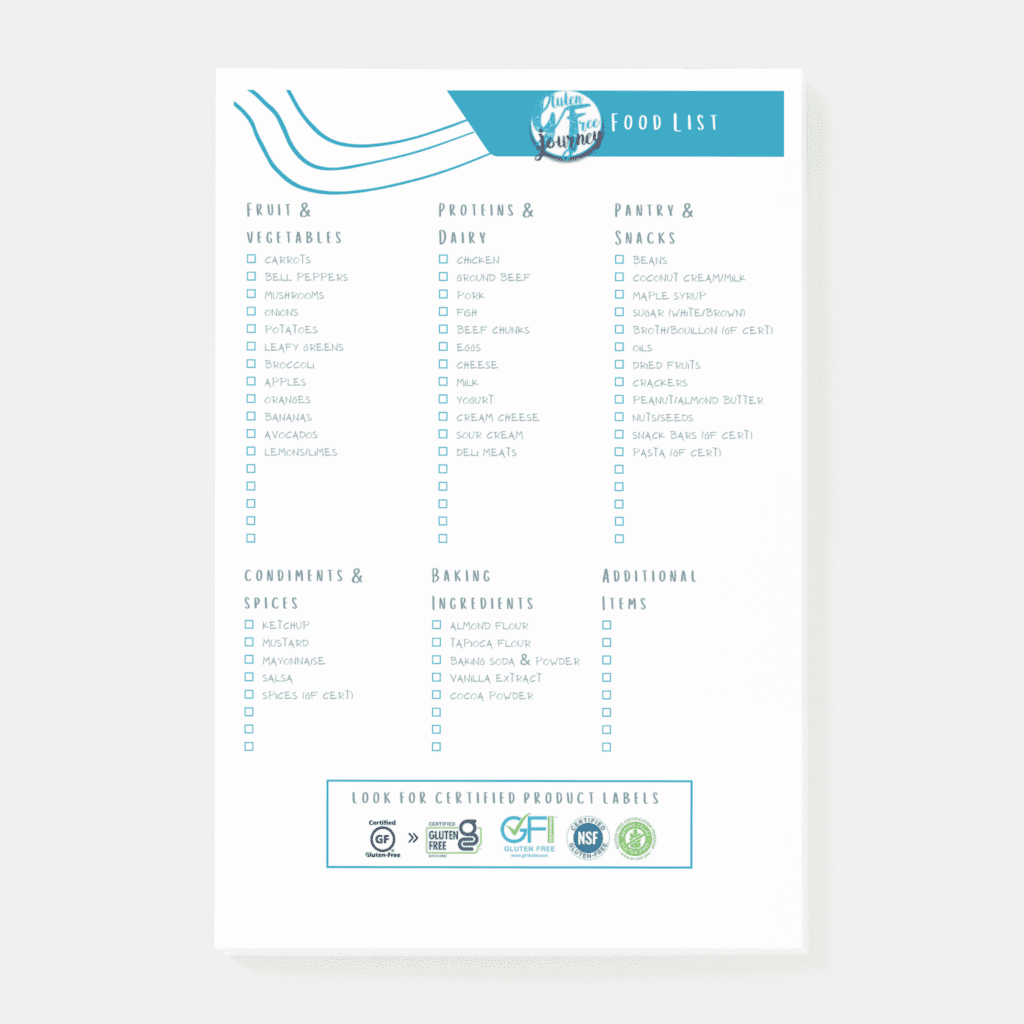
The Gluten Free Grocery List Notepad
If you’ve been looking for a way to simplify your trips to the store, you’re in the right place. Finding reliable staples shouldn’t feel like a chore.
Our Gluten Free Grocery List Notepad is designed to streamline your shopping experience, offering clarity for those managing Celiac disease and anyone new to a gluten free journey. Also now available in a dry erase magnet sheet!
Navigating the Aisles: A Comprehensive Gluten Free Shopping Resource
The foundation of a successful gluten free journey starts at the grocery store. When you have the right ingredients on hand, meal preparation becomes a joy rather than a chore. To build a versatile kitchen, it is helpful to break the store down by department, focusing on naturally gluten free items first and then moving into specialized alternatives.
The Fresh Perimeter: Produce and Proteins
The safest way to shop is to spend the majority of your time in the produce section. Almost everything here is naturally gluten free. Fresh fruits and vegetables provide the vitamins, minerals, and fiber essential for a balanced diet. Whether you are grabbing leafy greens for a salad, starchy tubers like sweet potatoes for roasting, or vibrant berries for snacking, these items are the “green light” zone of the store. Use caution with pre-packaged salad mixes and store-prepped salads, cross contamination is potential.
Moving to the meat and seafood department, fresh, unmarinated proteins are generally safe. Beef, poultry, pork, and fish in their natural state do not contain gluten. However, caution is required when looking at pre-seasoned meats or ready-to-cook meals. Often, marinades, rubs, and breading contain wheat-based thickeners or soy sauce made with wheat. Always opt for plain cuts and season them at home with certified gluten free spices to ensure safety.
The Grain and Flour Aisle: Beyond Wheat
One of the biggest misconceptions about a gluten free diet is that it is a “no-carb” diet. In reality, there is an incredible variety of grains and seeds that are naturally gluten free.
- Rice: All varieties, including white, brown, jasmine, basmati, and wild rice, are safe.
- Quinoa: A complete protein that works beautifully in salads or as a side dish.
- Corn: From cornmeal for polenta to corn tortillas and grits.
- Oats: Ensure these are specifically labeled Certified Gluten Free, as standard oats are often cross-contaminated during processing.
- Ancient Grains: Explore buckwheat (which is a seed, not wheat), amaranth, millet, and sorghum.
When it comes to baking, the options have expanded significantly. You will find single-ingredient flours like almond, coconut, cassava, and chickpea flour. For those who enjoy baking bread or cookies at home, look for 1:1 or measure-for-measure flour blends, which typically include binders like xanthan gum to mimic the elasticity of gluten.
Dairy and Plant-Based Alternatives
Most plain dairy products are gluten free, including milk, cream, butter, and most cheeses. However, flavoured yogurts, processed cheese spreads, and malted dairy drinks can contain hidden gluten. If you prefer plant-based alternatives, check the labels of oat milk (ensure it’s certified), almond milk, and soy milk. Some brands use thickeners derived from barley or wheat, so a quick scan of the ingredient list is always necessary.
The Pantry: Condiments, Spices, and Staples
This is where shopping requires the most vigilance. Gluten is a frequent hidden ingredient used as a thickener or stabilizer in pantry goods.
- Sauces: Traditional soy sauce contains wheat; look for Tamari or coconut aminos as a substitute. Check BBQ sauces, teriyaki, and salad dressings for flour or malt vinegar.
- Stocks and Broths: Many liquid stocks use wheat-derived yeast extract or flour as a thickener. Look for brands clearly marked gluten free.
- Spices: While pure spices are safe, some spice blends use wheat starch as an anti-caking agent.
- Canned Goods: Most canned beans and vegetables are safe, but “cream of” soups (like cream of mushroom) almost always use wheat flour as a base.
The Frozen Section: Convenience without the Risk
The frozen aisle has become a haven for gluten free convenience. You can now find gluten free pizzas, waffles, and even gluten free breaded chicken nuggets. When selecting frozen vegetables, choose those without added sauces, which may contain gluten. Frozen fruit is an excellent staple for smoothies, providing a cost-effective way to enjoy out-of-season produce.
Decoding the Labels: Identifying Hidden Gluten
The most important skill for a gluten free shopper is label literacy. Beyond the word “wheat,” gluten can hide under many aliases. Avoid products containing:
- Barley (often found in malt, malt flavouring, and malt vinegar).
- Rye.
- Triticale.
- Brewer’s yeast.
- Wheat starch (unless it has been processed to meet gluten free standards).
In many regions, labeling laws require top allergens like wheat to be clearly declared. However, barley and rye are not always highlighted, making it vital to read the full ingredient list rather than just looking for the “contains” statement.
Supporting the Community: Small Businesses and Specialty Brands
While big-box retailers carry many essentials, some of the best gluten free products come from small, dedicated businesses.
Many of these creators offer specialized flour blends, artisanal treats, and unique pantry items through online marketplaces like Etsy or local farmers’ markets. Supporting these small-scale producers not only helps the gluten free community thrive but often results in higher-quality, more flavourful products than mass-produced versions.
Frequently Asked Questions
No. A product can be wheat free but still contain barley, rye, or spelt, all of which contain gluten. Always look for a dedicated gluten free label.
Yes, all plain varieties of rice, including white, brown, and glutinous (sticky) rice, are naturally gluten free. Despite the name, glutinous rice does not contain gluten; the name refers to its sticky consistency.
It is generally recommended to avoid bulk bins due to the high risk of cross-contamination from shared scoops or airborne flour dust in the area.
Most traditional soy sauces are brewed with wheat. You should choose Tamari, which is traditionally wheat-free, or coconut aminos, ensuring the bottle is labeled gluten free.
Oats are often processed in facilities that handle wheat. Only purchase oats that are specifically labeled Certified Gluten Free.
Yes, the distillation process removes gluten proteins. However, be cautious with flavoured spirits or mixers, as they may add gluten-containing ingredients after distillation.
No, malt vinegar is derived from barley and contains gluten. Distilled white vinegar, apple cider vinegar, and wine vinegar are safe alternatives.
In most cases, natural flavours in Canada are gluten free. However, if they are derived from barley, they may contain gluten. If the label doesn’t specify, it is safest to contact the manufacturer or stick to certified products.
Not always. Some brands coat their fries in flour to make them crispier. Always check the ingredients for wheat flour or starch.
Yes, pure cornstarch is naturally gluten free and is an excellent substitute for flour when thickening sauces or gravies.
While most cheese is safe, shredded cheeses sometimes use flour as an anti-caking agent (though potato starch or cellulose is more common), and specialty cheeses like blue cheese were traditionally cultured on bread (though this is rare today). Always check the label.