
There is nothing quite like the warm, comforting aroma of fresh bread filling the kitchen, a simple pleasure that many following a celiac or gluten free diet assume they have to give up. For years, finding or making a high-quality gluten free sandwich bread meant settling for dense, heavy loaves that disintegrated into crumbs the moment you tried to spread butter or build a sandwich.
This easy gluten free bread recipe changes the standard for home baking. Engineered to be approachable for both complete beginners and experienced celiac disease bakers, this homemade gluten free sandwich bread provides a soft, pillowy centre wrapped in a delicate golden crust. It is a sturdy, highly adaptable recipe for gluten free bread that stands up to thick layers of deli meats, condiments, and fresh toppings without tearing or collapsing, making store-bought frozen loaves a thing of the past.
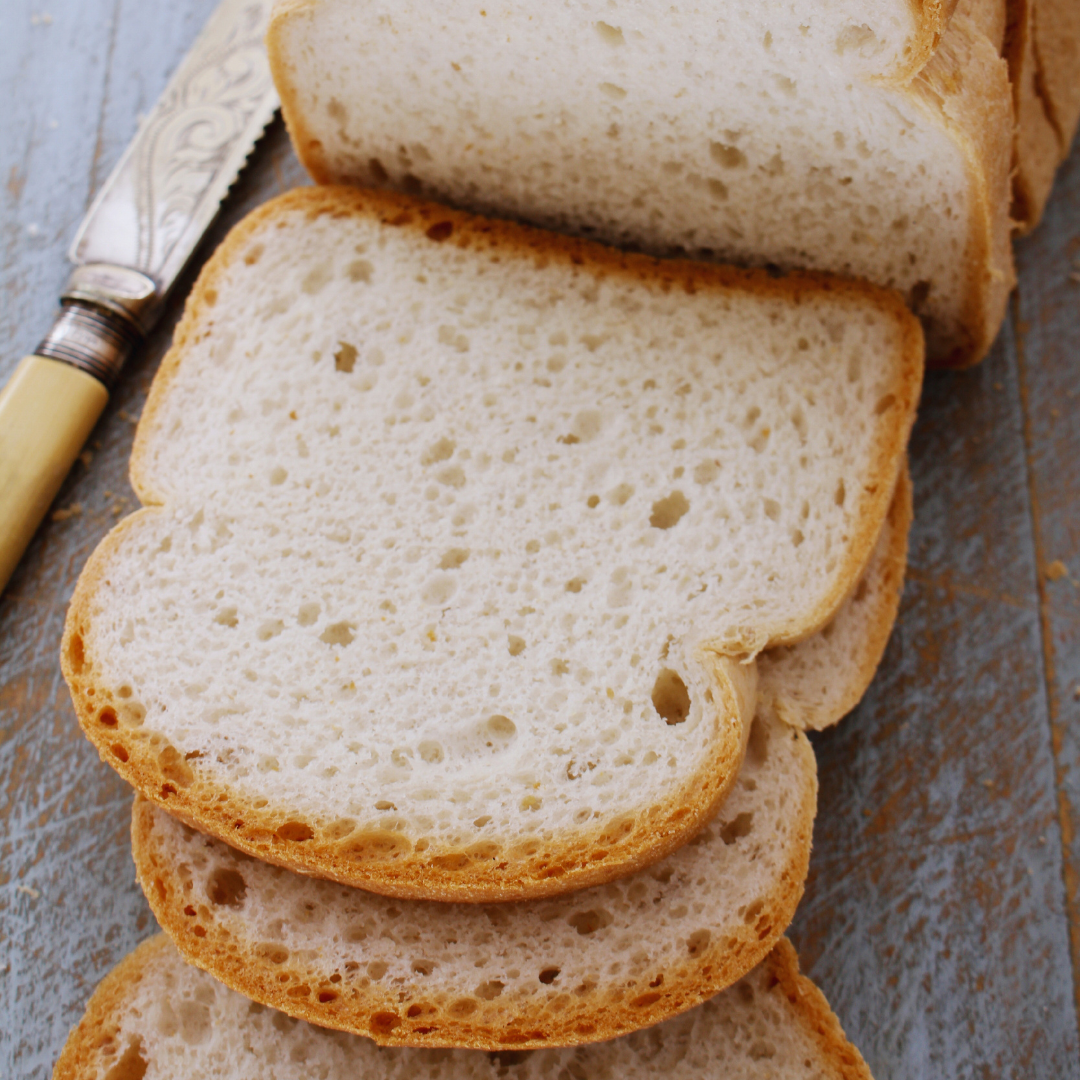
Gluten Free Sandwich Bread Recipe
Ingredients
- 2 ½ teaspoons active dry yeast
- 2 tablespoons sugar - divided
- ¼ cup water - warmed to 110 degrees
- 1 ¼ cups milk - warmed to 110 degrees
- 2 tablespoons oil - canola/vegetable
- 2 tablespoons butter - softened
- 2 eggs - large
- 1 teaspoon apple cider vinegar
- 3 cups all purpose flour - gluten free
- ⅓ cup cornstarch
- 1 ¾ tsp salt
- 1 tsp baking powder

Instructions
Proof Yeast
- Pour active dry yeast into bowl of an electric stand mixer, along with 1/2 teaspoon sugar and warm water2 1/2 teaspoons active dry yeast, 2 tablespoons sugar, 1/4 cup water
- Whisk to dissolve yeast, then let rest 5 – 10 minutes to proof yeast
After Proofing
- Add in remaining granulated sugar, milk, oil, butter, eggs and apple cider vinegar2 tablespoons sugar, 1 1/4 cups milk, 2 tablespoons oil, 2 tablespoons butter, 2 eggs, 1 teaspoon apple cider vinegar
- Using paddle attachment, whip on low speed to combine
- Add in all remaining ingredients and mix on low speed until combined3 cups all purpose flour, 1/3 cup cornstarch, 1 3/4 tsp salt, 1 tsp baking powder
- Increase to medium speed and mix for 5 minutes
- Pour bread dough into a buttered 9-by-5-inch baking dish
- Spread & smooth top with wet spatula/hands, while slightly doming loaf
Let it Mellow & Rise
- Transfer to a warm place free from draft to rise for 1 hour – 1 hour 15 minutes.
- Preheat oven to 375 degrees during last 10 minutes of rising
- Bake bread in preheated 375 degree oven for 20 minutes, then reduce oven temperature to 350,
- Tent loaf with foil and bake 20 minutes longer or until loaf is done
- Cool in loaf pan several minutes then invert onto a wire rack to cool completely.
- Once cool store in airtight container or resealable bag in refrigerator
- Slice as desired
Notes
Nutrition
Baking Gluten Free Sandwich Bread at Home
Baking successful gluten free sandwich bread requires a fundamental shift in how you think about flour, liquid ratios, and structural development. In traditional wheat-based baking, long chains of gluten proteins form an elastic network when kneaded. This elastic web traps carbon dioxide gas released by yeast during fermentation, allowing traditional bread dough to expand into a light, airy structure.
Because gluten free bread dough lacks these natural elastic proteins, we must build a substitute framework using a strategic combination of starches, grain flours, and hydrocolloids like xanthan gum. Understanding how these ingredients interact allows you to produce a gluten free bread that matches the crumb, rise, and taste of standard white bakery loaves.
The Science Behind Gluten Free Flour Blends
Creating an easy gluten free bread recipe that doesn’t turn out gummy or dry relies entirely on the precision of your flour blend. Using a single alternative flour (like rice flour alone) will result in a dense, sandy loaf. Most all purpose gluten free flour blends combine different grain flours and pure starches, simulating the properties of wheat flour:
- White Rice Flour (The Base): Rice flour acts as the main bulk agent. It provides structure, mild neutral flavour, and body to the bread crumb without overpowering the loaf with strong whole-grain notes.
- Tapioca Starch / Flour (The Elasticity): Derived from cassava root, tapioca starch adds flexibility, chewiness, and expansion capabilities to the gluten free bread dough. It keeps the interior crumb soft and prevents the slice from breaking when bent.
- Potato Flour / Starch (Moisture Retention): Potato starch absorbs high amounts of liquid during the mixing process and retains it during baking. This prevents your gluten free sandwich bread from drying out rapidly on the counter.
- Cornstarch (Lightness): Adding gluten free cornstarch lightens the overall weight of the flour mix, helping the yeast push the dough upward for a better rise and softer texture.
- Xanthan Gum (The Gluten Binding Agent): Xanthan gum is non-negotiable in this and most recipes for gluten free bread. It functions as the primary binder, trapping carbon dioxide bubbles created by the yeast and preventing the dough structure from collapsing inside the oven. If your all purpose gluten free flour omits xanthan gum, add 1 teaspoon to your dry ingredients.
Understanding Batter & Dough Consistency
One of the most frequent mistakes home bakers make when trying a new gluten free bread recipe is trying to treat the dough like traditional wheat dough. Wheat dough is kneaded by hand on a floured surface until smooth and springy.
In contrast, high-performing gluten free bread dough should closely resemble a thick, sticky cake or muffin batter, similar to banana bread batter. High moisture content is essential because gluten free starches absorb significantly more water than wheat flour. If your dough is firm enough to roll out or shape by hand, your final baked gluten free bread will turn out dry, dense, and crumbly.
When mixing this easy gluten free recipe, use an electric stand mixer fitted with the paddle attachment rather than a dough hook. Whipping the liquid and flour components on medium-high speed for five minutes aerates the wet mix and thoroughly hydrates the xanthan gum, building the structural strength needed to hold air during the rise.
Master Baking Techniques: Rise & Oven Spring
Yeast is a delicate living organism that requires optimal warmth and moisture to produce carbon dioxide. In cooler home kitchens, ensuring proper liquid temperatures is vital.
- Temperature Control: Always heat your water and milk to exactly 110°F (43°C) before adding active dry yeast. Temperatures below 100°F (38°C) leave the yeast dormant, resulting in a flat loaf, while temperatures exceeding 120°F (49°C) will kill the yeast cells entirely.
- Proofing Step: Dissolving the yeast with a small amount of sugar in warm liquid triggers proofing. Within 5 to 10 minutes, the surface should form a thick, frothy foam. This confirms your yeast is active before you add the rest of the flour blend.
- Two-Stage Baking Method: To achieve a beautifully domed loaf with a golden crust, this recipe for gluten free bread utilizes a two-stage oven temperature cycle. Starting the bake at 375°F (190°C) provides a burst of heat that encourages rapid gas expansion (“oven spring”). Lowering the temperature to 350°F (175°C) halfway through, and tenting the pan with aluminum foil, allows the center of the loaf to cook completely without burning the top crust.
Cooling, Slicing, and Storage Recommendations
Resist the temptation to slice into your freshly baked gluten free sandwich bread while it is warm! When gluten-free bread comes out of the oven, its internal structure is still setting as steam evaporates from the crumb. Cutting into a hot loaf causes steam to escape instantly, resulting in a gummy, wet texture along the slice line.
BAKING & COOLING TIMELINE
- In-Pan Cooling: Allow the loaf to sit in the warm baking pan for 5 to 10 minutes after removal from the oven to let the outer crust stabilize.
- Wire Rack Cooling: Invert the loaf carefully onto a wire cooling rack and let it come completely to room temperature (at least 2 hours) before slicing.
- Slicing Technique: Use a sharp, fine-toothed serrated bread knife. Use a gentle sawing motion rather than pressing down with force to preserve the soft internal crumb.
- Short-Term Storage: Store sliced bread in an airtight container at room temperature for up to two days, or in the refrigerator for up to five days.
- Freezing for Longevity: Because homemade gluten free bread contains no artificial chemical preservatives, freezing is the best way to maintain long-term freshness. Slice the entire loaf, place squares of parchment paper between the individual slices, and seal them inside a freezer-safe zip-top bag. Toast frozen slices directly from the freezer whenever needed.
Frequently Asked Questions About This Recipe
This recipe eliminates complex hand-kneading, steam pans, and hard-to-find ingredients. By using standard baking pans and an electric mixer paddle, anyone can make a successful loaf of gluten free sandwich bread on their first attempt.
A gummy crumb usually results from slicing the loaf before it cools completely, using liquids that were too hot (killing the yeast), or an incorrect flour-to-liquid ratio. Always weigh your flours with a kitchen scale and let the loaf cool for at least two hours on a wire rack.
Yes. If using instant (quick-rise) yeast, you can skip the preliminary 10-minute proofing step in warm water and mix the yeast directly into the dry flours. Keep liquid temperatures around 110°F (43°C) for ideal activation.
To adapt this gluten free bread recipe for a dairy-free diet, replace the cow’s milk with an equal amount of unsweetened almond, oat, or soy milk. Substitute the softened butter with your preferred dairy-free vegan butter block or neutral cooking oil.
Bread collapse occurs when dough is over-proofed. If the gluten free bread dough rises for too long, the gas bubbles grow too large for the xanthan gum matrix to support, causing the top to fall during baking. Bake the loaf as soon as the dough crowns about 1/2 inch above the rim of the pan.
Yes. Xanthan gum acts as the essential structural binder that replaces the missing gluten network. Without xanthan gum, carbon dioxide gas will escape during baking, resulting in a flat, crumbly loaf.
Eggs provide both liquid structure and protein binding in this recipe. While you can try substituting them with commercial egg replacers or aquafaba (chickpea liquid), the final loaf may be slightly less airy and more delicate.
Use a standard 9-by-5-inch loaf pan lined or grease-coated with butter or oil. Avoid using larger 10-by-6-inch pans, as the wider base will cause the gluten free bread dough to spread outward rather than rising upward into a tall sandwich shape.
Yes. Set your machine to its dedicated “Gluten-Free” setting, which features a single mixing and rising cycle. Avoid standard bread settings that include a second punch-down step, as disrupting risen gluten free bread dough will ruin its structure.
Follow the two-stage baking instructions in the recipe. Baking at 375°F (190°C) for the first 20 minutes triggers oven spring, and lowering to 350°F (175°C) while loosely covering the loaf with aluminum foil protects the upper crust from burning while the middle bakes through.
Use a long, sharp serrated bread knife and allow the loaf to cool completely to room temperature first. Use light, horizontal sawing motions without pressing down hard on top of the loaf to maintain clean, smooth slices.

It worked!!! Thank you, thank you, thank you. We are very excited to have bread that’s homemade again.
First time making GF bread. Always wanted to but was nervous. Came across this recipe and I knew I could do it. Both loaves came out beautifully and tasted delicious.
Thank you for the easy recipe. Making more tomorrow!
I go to see a few sites and blogs daily to read, unlike many, this one provides quality posts and recipes. A delicious bread recipe, can’t wait to make it for others to try too.
Everyone loves it! Whenever my family get together and share this bread, everyone happy.
Great site, continue the good work!
Enjoyed this gluten free bread. I like this recipe, enjoyed this one. Thank you for putting up.
I have never made bread before and this recipe made it so easy! I kinda messed up the first time but the second time worked out perfectly!!
This is the best ever.
Thanks for sharing.
My family and neighbours love it and its easy to make.
Easy recipe that is yummy! thank you!
I’ve been making bread for many years and have tried many different recipes. This recipe is really the best! I keep coming back to it and I always make it a few times a month it’s definitely my go to. It’s delicious and does not last long in my house! 🙂
Hi there,
Your bread recipe was good. Added honey for a little extra and yum!
Finally, a loaf that doesn’t crumble! I have tried so many gluten-free bread recipes, and this is the first one that actually holds together for a sandwich. The instructions are very clear, making it easy for someone who isn’t a pro baker.
I was intimidated by yeast baking, but this recipe was straightforward. The tip about the batter consistency was a lifesaver. My kitchen smells amazing!
Success on the first try! I’m new to the gluten-free world and was worried about baking. This loaf came out perfectly golden and soft. Thank you for such a reliable resource.
No complicated steps or weird ingredients I couldn’t find at my local grocery store. It’s just good, honest sandwich bread.
The best for grilled cheese sandwich!
We made grilled cheese sandwiches last night, and the bread toasted up so beautifully. It has a great flavour that isn’t too overpowering.
I am the world’s worst Baker. This bread recipe is amazing. Believe me, if I can do it anyone can! Kids loved the bread. Thank you I will be definitely be making more gluten free bread at home!
Most GF bread feels like a brick, but this one is actually soft to the touch. I love that I don’t have to toast it just to make it edible.
I used almond milk and a vegan butter substitute, and the loaf still turned out fantastic. It’s great to have a recipe that is so versatile.
I sliced the whole loaf and froze it with parchment paper between the slices as suggested. It toasts up perfectly straight from the freezer!
The fact that there is no kneading required makes this so much faster than traditional bread. My stand mixer did all the heavy lifting.
The mix of rice flour and starches is spot on. It has a lovely light crumb that isn’t too “holey,” making it great for spreading cold butter.
A lot of gluten-free recipes have a gritty or sandy mouthfeel, but this one is incredibly smooth. The xanthan gum really does its job here.
Finally, a gluten-free loaf that is large enough for a real sandwich. It’s sturdy enough for ham and cheese without falling apart in the lunchbox.
I’m saving so much money making my own bread, and the quality is ten times better than the frozen loaves at the supermarket.
Finding a safe, homemade option that tastes this good is a relief. I feel much better knowing exactly what ingredients are going into my bread.
I love that this is nut-free and can be easily made dairy-free. It’s a very inclusive recipe for families with different dietary requirements.
Following the two-stage temperature tip really worked. The crust is golden and slightly crisp, while the centre stayed moist and soft.
We used a slightly older loaf for French toast this morning, and it was incredible. It soaked up the egg mixture perfectly without becoming mushy.
It’s nice to find a recipe that uses measurements and ingredients that are easy to find here in Canada. Highly recommended!
This bread is sturdy enough to hold a thick layer of avocado and a poached egg. It’s my new favourite weekend brunch staple.
I was impressed by how well this kept in the fridge. Usually, I have to freeze GF bread immediately, but this stayed nice for a few days.
I dried out some cubes of this bread to make gluten-free stuffing for dinner, and it held its shape perfectly. Everyone loved it.
My kids love this with a bit of cinnamon and sugar. It’s the perfect comfort food for a chilly afternoon.
I made this for my husband, who doesn’t usually eat gluten-free, and he couldn’t tell the difference. This is a huge win for our household.
Approved by my picky kids. Sending my son to school with gluten free sandwiches used to be a struggle because the bread was always too dry. He actually ate his whole lunch today!
A staple in our house. I’ve been making this every Sunday for a month now. It’s a dependable recipe that works every time. The texture is exactly what I’ve been missing.
This recipe was a complete lifesaver for our school lunch prep! My daughter has celiac disease, and finding a gluten free sandwich bread that doesn’t fall apart or disintegrate in her lunchbox was a constant struggle. This loaf turns out so soft, sturdy, and easy to slice thin. She came home from school yesterday so excited that her sandwich held together completely!
I was honestly terrified of yeast baking after a few disastrous gluten-free bricks in the past, but this easy gluten free bread recipe proved me wrong! The tip about looking for a batter-like consistency instead of a firm dough made all the difference. My loaf rose beautifully in the oven, and the crust was a perfect golden color. I’ll definitely be baking this every weekend.
Finally, a gluten free bread dough that actually rises and gives you a nice light crumb! The mix of white rice flour and starches gives it a soft texture without any gritty aftertaste. We sliced the whole loaf once it cooled down, toasted a couple of pieces for breakfast with butter and jam, and it was pure perfection. So grateful for this recipe!
Made this recipe for gluten free bread over the weekend, and my entire kitchen smelled like a real bakery. The loaf turned out wonderfully soft in the center with just the right amount of chew. It holds up so well in the toaster without getting dry or crumbly.
This is hands down the best gluten free sandwich bread I have ever made at home. Following the two-stage baking temp and tenting with foil halfway through worked like a charm—the crust was lightly crisp while the inside stayed perfectly moist. It makes the most incredible grilled cheese sandwiches!
I loved how straightforward and clear the instructions were for this easy gluten free bread recipe. No complicated hand-kneading or obscure ingredients required! I followed the storage tip and froze the slices with parchment paper in between, and pulling a slice straight from the freezer to the toaster every morning has been a game changer.
As someone newly diagnosed with celiac, I was missing simple everyday toast more than anything. This recipe for gluten free bread gave me that simple joy back! Has a fantastic elasticity that doesn’t crumble when you spread cold butter on top. 10/10 recommendation for anyone needing a reliable daily loaf.
I adapted this loaf to be dairy-free by using unsweetened almond milk and vegan butter, and it still turned out amazing! It’s super rare to find a gluten free bread recipe that adapts so well to extra dietary restrictions without sacrificing the structure. It turned out so soft, fluffy, and delicious.
I made a loaf yesterday and used a couple of day-old slices for French toast this morning, it was absolute heaven! The bread absorbed the egg mixture without turning mushy or breaking apart in the pan. Sturdy, reliable, and absolutely delicious. This is permanently saved in my recipe binder!