
Master the Art of a Perfectly Moist Gluten Free Carrot Cake
Baking a truly exceptional gluten free carrot cake requires a careful balance between structure, hydration, and spice. Traditional wheat-based carrot cakes rely heavily on gluten networks to lift heavy additions like finely shredded root vegetables, plump raisins, and chopped nuts. Without wheat protein, alternative bakes can easily turn gummy, overly dense, or sink in the middle under the weight of the mix-ins.
Fortunately, creating a tender, flavorful carrot cake gluten free bakers can rely on is surprisingly straightforward when you understand the science of gluten free ingredients. By pairing a high-quality 1-to-1 baking blend with natural humectants, such as unsweetened applesauce, brown sugar, and freshly grated carrots, you create a soft, velvety crumb that holds its structure while retaining moisture for days.
Whether you are baking for a family member with Celiac Disease or simply exploring gluten-conscious baking, this recipe covers everything from flour selection to frosting technique for a master-class gluten free carrot cake recipe.
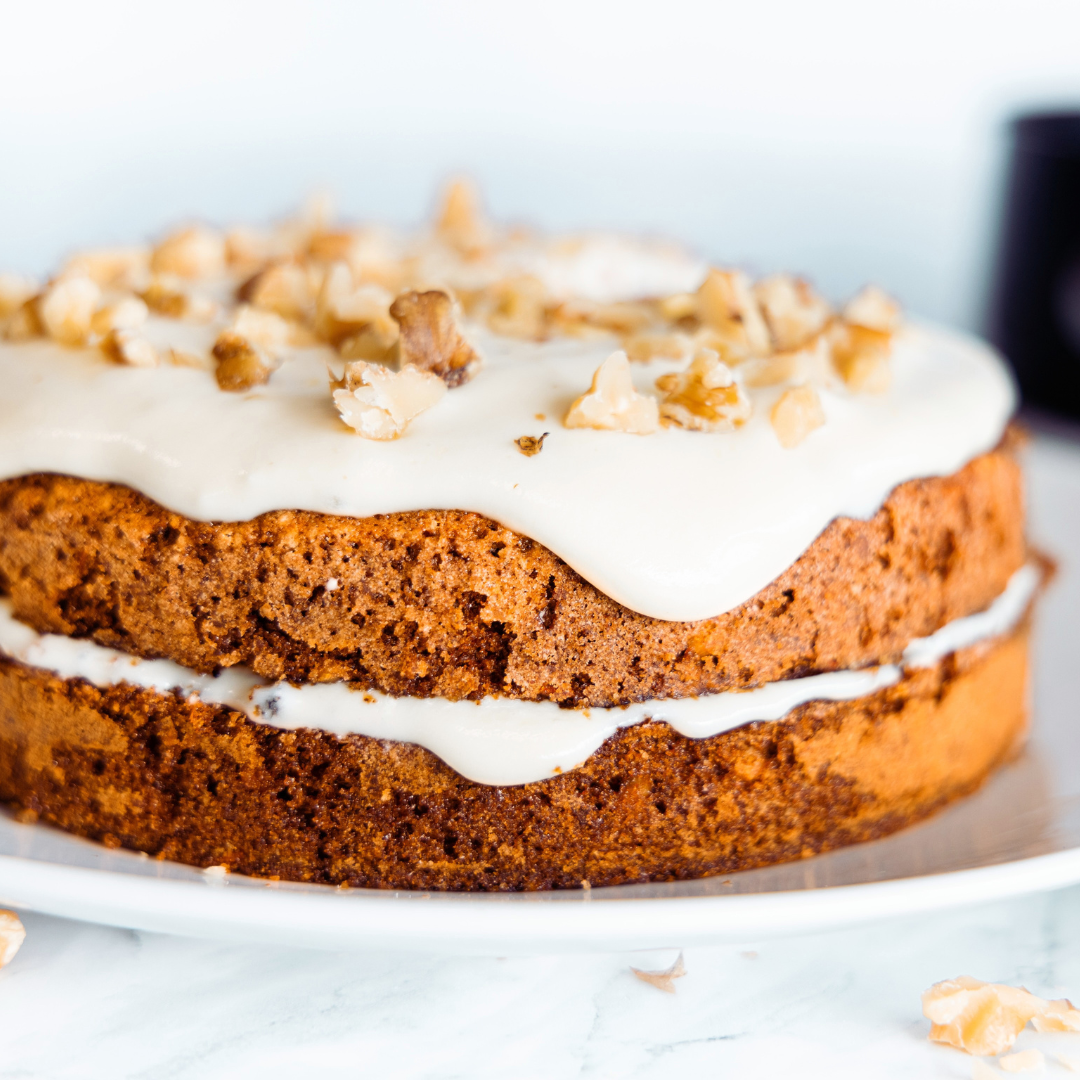
Gluten Free Carrot Cake Recipe
Ingredients
For the Cake Layer Base
- 2½ cups Gluten Free Flour Blend (325 g) high-quality 1-to-1 gluten-free baking flour blend
- 2 teaspoons Baking Powder
- 1 teaspoon Baking Soda
- 1 teaspoon Sea Salt Fine
- 1½ teaspoons Ground Cinnamon
- 1 teaspoon Ground Ginger
- ¼ teaspoon Ground Nutmeg
- ¼ teaspoon Ground Cloves
- 1 cup Vegetable Oil (240 mL)
- 1½ cups Light Brown Sugar (300 g) packed
- ½ cup Granulated Sugar (100 g)
- ¾ cup Unsweetened Applesauce (180 g) room temperature
- 4 large eggs room temperature
- 1 teaspoon Pure Vanilla Extract
- 3 cups Fresh Carrots (300 g) finely grated, peeled whole carrots (approx. 4–5 medium carrots)
- 1 cup Pecans/Walnuts chopped and toasted
For the Velvet Cream Cheese Frosting
- 16 ounces Cream Cheese brick (450 g) full-fat block style, completely softened to room temperature
- ½ cup Unsalted Butter (113 g) softened to room temperature
- 4 cups Confectioners' Sugar (480 g) sifted icing sugar
- 1½ teaspoons Pure Vanilla Extract
- pinch Sea Salt Fine
- 1 cup Topping Garnish (120 g) extra toasted pecans/walnuts, coarsely chopped

Equipment
- 2 23-cm (9-inch) round cake pans
- Parchment paper
- Box grater or food processor
- 2 Large mixing bowls
- Wire cooling rack
- Stand mixer or handheld electric mixer
- Off-set icing spatula
Instructions
Preheating and Pan Preparation
- Position your oven rack right into the centre grid.
- Preheat your oven to 177°C (350°F).
- Lightly grease the bottoms and inside walls of two 23-cm (9-inch) round cake pans with non-stick spray or a bit of oil.
- Trace the bottom of your pans onto parchment paper, cut out the circles, and press them firmly into the bottom of each pan.
- Lightly grease the top of the parchment paper layer to guarantee a seamless release later.
Toasting the Toppings
- Spread your chopped pecans/walnuts evenly across a rimmed baking sheet.1 cup Topping Garnish
- Slide them into the warming oven for 6 to 8 minutes, shaking the pan halfway through, until they release a rich, aromatic fragrance.
- Remove them immediately from the oven and transfer them to a cool plate so they do not continue to cook on the hot tray.
- Let them cool completely before introducing them to the batter.
Whisking the Dry Structural Elements
- In a large mixing bowl, combine your gluten free flour blend, baking powder, baking soda, fine sea salt, ground cinnamon, ginger, nutmeg, and cloves.2½ cups Gluten Free Flour Blend, 2 teaspoons Baking Powder, 1 teaspoon Baking Soda, 1 teaspoon Sea Salt, 1½ teaspoons Ground Cinnamon, 1 teaspoon Ground Ginger, ¼ teaspoon Ground Nutmeg, ¼ teaspoon Ground Cloves
- Use a wire whisk to thoroughly blend these dry components for at least 30 seconds.
- This step is incredibly vital for gluten-free baking; equal distribution of your leavening agents prevents uneven sinking or pockets of unreacted baking soda that can turn your carrots an unappealing green colour.
Blending the Liquid Base
- In a separate large bowl, combine the light brown sugar, granulated sugar, neutral vegetable oil, four room-temperature eggs, unsweetened applesauce, and one teaspoon of pure vanilla extract.1 cup Vegetable Oil, 1½ cups Light Brown Sugar, ½ cup Granulated Sugar, ¾ cup Unsweetened Applesauce, 1 teaspoon Pure Vanilla Extract, 4 large eggs
- Whisk vigorously by hand until the sugars begin to dissolve, the mixture lightens slightly in colour, and absolutely no stubborn brown sugar lumps remain.
Incorporating the Fresh Moisture
- Add your three cups of finely grated, hand-peeled carrots directly into the wet bowl, stirring to distribute them evenly throughout the liquid.3 cups Fresh Carrots
- Incorporating the carrots right into the liquid ingredients ensures they are completely coated, preventing clumping when the flour is introduced.
Combining and Folding
- Pour the wet carrot mixture directly into the dry ingredient bowl.
- Switch to a sturdy rubber spatula or a wooden spoon.
- Gently fold the mixtures together just until the flour streaks disappear.
- Gluten-free flour blends can become unpleasantly dense if worked too aggressively, so stir with a gentle hand.
- Gently fold in 1 cup of your cooled, toasted pecans until just distributed.1 cup Pecans/Walnuts
Baking to Perfection
- Divide the cake batter precisely and evenly between your two prepared baking pans.
- If you have a digital kitchen scale, use it here to ensure identical layers.
- Smooth the tops with your spatula.
- Bake in the preheated oven for 30 to 35 minutes.
- To test for doneness, gently press the centre of a cake layer; it should spring back resiliently.
- Alternatively, slide a clean toothpick into the dead centre; it must come out completely clean or with just a few dry crumbs attached.
The Cooling Phase
- Remove the pans from the oven and set them flat on a wire cooling rack.
- Allow the cakes to rest undisturbed inside their pans for exactly 20 to 25 minutes to let the fragile gluten free crumb settle.
- Run a thin, flexible knife carefully around the perimeter of the cakes to loosen the edges.
- Invert the pans to release the cakes onto the wire rack, peel away the circular parchment paper backing, and leave the layers to cool down to room temperature for at least an hour.
Whipping the Velvet Frosting
- In the bowl of a stand mixer fitted with the paddle attachment (or using a deep bowl with an electric hand mixer), beat the softened block cream cheese and unsalted butter together on medium-high speed for roughly 2 full minutes until the mixture looks uniformly smooth, creamy, and free of lumps.16 ounces Cream Cheese, ½ cup Unsalted Butter
- Turn the mixer speed down to its lowest setting.
- Gradually introduce the sifted confectioners' sugar one cup at a time, allowing it to integrate smoothly.4 cups Confectioners' Sugar
- Add the remaining vanilla extract and a tiny pinch of salt.1½ teaspoons Pure Vanilla Extract, pinch Sea Salt
- Once incorporated, crank the speed up to high for 2 to 3 minutes, whipping the frosting into a velvety, spreadable state.
Assembly and Chilling
- If your cooled cake layers have developed a slight dome on top, use a long serrated knife to carefully trim them flat.
- Place your first cake layer top-side up onto a serving platter or cake stand.
- Spread approximately ¾ cup of the whipped cream cheese frosting evenly over the surface.
- Carefully place the second cake layer directly on top, placing it top-side down to ensure an absolute flat upper surface.
- Use the remaining frosting to generously coat the top and outer sides of the entire cake.
- Garnish the top border or the lower sides with your remaining cup of toasted pecans.1 cup Pecans/Walnuts
- Slide the fully decorated cake into the refrigerator for 30 minutes before slicing; this firms up the cream cheese layer, ensuring clean, picture-perfect cuts.
Nutrition
The Essential Ingredients for Success
To achieve a bakery-standard gluten free cake, every component in this gluten free dessert recipe serves a specific functional purpose:
- Gluten Free 1-to-1 Baking Flour Blend: Look for a commercial blend that contains a mix of rice flours, starches (tapioca, potato, or cornstarch), and pre-blended xanthan gum. Xanthan gum acts as the structural binder, mimicking gluten elasticity so the cake layers rise evenly without collapsing.
- Freshly Grated Carrots: Avoid pre-shredded packaged carrots from the grocery store. Pre-packaged options are coated in starches to prevent sticking, which dries them out and leaves them tough. Grating whole carrots using the fine side of a box grater releases natural juices that infuse directly into the batter.
- Unsweetened Applesauce & Oil: Vegetable oil provides immediate moisture and keeps the cake tender even after chilling. Adding unsweetened applesauce replaces part of the heavy oil volume with fruit pectin, lightening the crumb while binding moisture.
- Warm Spice Blend: Cinnamon, ginger, nutmeg, and a dash of cloves enhance the natural sweetness of the carrots and brown sugar without overpowering the delicate batter.
- Cream Cheese & Real Butter: For the frosting, using full-fat brick cream cheese and unsalted butter at room temperature guarantees a thick, pipeable finish that won’t run or melt off the cake layers.
Baking Tips for Flawless Gluten Free Cake Layers
1. Measure Your Flour by Weight
Gluten free flour blends vary drastically in density. Packing flour into a measuring cup can add up to 25% extra starch, resulting in a heavy, dry bake. For best results, use a digital kitchen scale to measure 325 grams of flour blend, or spoon the flour gently into your measuring cup and level it off with a flat knife.
2. Let the Batter Hydrate Before Baking
Gluten free starches absorb liquid more slowly than traditional wheat flour. Once your wet and dry ingredients are fully combined, let the batter rest in the mixing bowl for 10 to 15 minutes before pouring it into your prepared 9-inch cake pans. This resting period allows the rice flour to hydrate fully, eliminating any unpleasant gritty texture in the final crumb.
3. Cool Completely Before Frosting
Gluten free cakes are far more fragile when warm. Allow the cake layers to cool in their pans for 20 minutes before turning them onto wire cooling racks. Ensure the layers are completely at room temperature, or chilled in the refrigerator for 30 minutes, before spreading your cream cheese frosting. Warm layers will cause cream cheese icing to melt into a runny mess.
Frequently Asked Questions
A 1-to-1 or “measure-for-measure” gluten free baking flour containing xanthan gum yields the most consistent structure. Popular choices include King Arthur Measure for Measure or Bob’s Red Mill 1-to-1 Baking Flour.
If your blend does not include xanthan gum, add ½ teaspoon of xanthan gum or guar gum to the dry ingredients. This step is necessary to prevent a crumbly gluten free cake.
Gumminess occurs when there is too much liquid relative to starch, or when the cake is underbaked. Ensure you grate your carrots finely rather than coarsely, and test the center with a toothpick before removing the cake from the oven.
Yes. Melted coconut oil works well as a direct 1:1 substitute. Melted butter adds a rich flavor, though it may result in a slightly firmer crumb when the cake is chilled.
Yes. Use a vegan block butter substitute and vegan cream cheese brick for the frosting. Ensure your gluten free flour blend is dairy-free as well.
Absolutely. You can add up to ¾ cup of drained crushed pineapple, raisins, or shredded coconut. Be sure to squeeze out excess juice from canned pineapple to avoid adding excess moisture to the batter.
Yes! Divide the batter evenly into 24 paper-lined muffin tins. Bake at 350°F (175°C) for 18 to 22 minutes, or until a toothpick inserted into the center comes out clean.
Because of the cream cheese frosting, store leftover cake covered in the refrigerator for up to 5 days. Bring slices to room temperature 20 minutes before serving for optimal texture.
Yes. Bake the layers, let them cool completely, and wrap each layer tightly in two layers of plastic wrap and aluminum foil. Freeze for up to 3 months. Thaw overnight in the refrigerator before frosting.
Pre-shredded carrots are too thick and dry for cake batter. Freshly hand-grated carrots release essential moisture and bake smoothly into the cake.
Yes, simply omit the pecans or walnuts from the batter and garnish. The structural integrity of the cake remains unchanged.

⭐⭐⭐⭐⭐ 5 stars! This recipe is a game-changer. The instructions were very clear, and the tip about toasting the pecans really elevated the flavor. It turned out beautiful and tasted just like a ‘regular’ carrot cake, none of my guests could even tell it was gluten free. Thank you for such a delicious carrot cake recipe!