
When you receive a positive blood test or endoscopy confirming a Celiac Disease diagnosis, the initial reaction is almost always a mix of relief and intense overwhelm. You might find yourself handed a brief informational pamphlet by your physician, told to “stop eating gluten,” and sent on your way.
However, switching to a gluten free diet is only the first step in managing an autoimmune condition. Celiac Disease is systemic. When you ingest gluten, your immune system launches an attack on the lining of your small intestine, specifically damaging the finger-like projections called villi, which are responsible for absorbing everything you eat.
Because the systemic damage goes far beyond basic digestive upset, recovery requires active, structured medical surveillance. This comprehensive guide outlines the essential follow-up tests, screening schedules, and clinical milestones recommended by Canadian gastroenterology standards to ensure your body recovers completely.
Phase 1: At Diagnosis & Immediate Next Steps (Month 0 – 1)
The first 30 days after diagnosis focus on establishing your clinical baselines, identifying micronutrient deficiencies caused by malabsorption, and building your expert care team.
Securing Your Specialist Care Referrals
Do not navigate this condition entirely through your family physician or nurse practitioner. Request immediate referrals to two essential specialists:
- A Gastroenterologist (GI Specialist): Your GI specialist oversees your long-term mucosal healing roadmap, monitors antibody drops, and determines if or when follow-up biopsies are necessary.
- A Registered Dietitian Specializing in Celiac Disease: A general nutritionist is not enough. You need a specialized dietitian to conduct a thorough audit of your kitchen, identify hidden cross-contamination hazards, explain complex labeling laws, and ensure your new diet is nutritionally complete.
The Baseline Malabsorption Lab Panel
Before your intestinal villi begin to heal and resume normal nutrient absorption, your physician must check for common hidden deficiencies. Ensure your doctor orders the following specific lab panels:
- Complete Blood Count (CBC) & Serum Ferritin: Iron deficiency anemia is one of the most common presentations of adult celiac disease. Testing ferritin reveals your true iron storage levels.
- Vitamin D3 (25-hydroxyvitamin D) & Vitamin B12: Malabsorption typically hits the fat-soluble vitamins and B-vitamins hardest. Low B12 can lead to neurological issues and intense fatigue, while low D3 halts bone rebuilding.
- Folate, Zinc, and Copper: These trace elements are deeply affected by proximal small bowel damage and should be checked at baseline.
- Liver Function Panel (ALT/AST): Elevated liver enzymes are frequently noted in newly diagnosed Celiac Disease patients due to localized systemic inflammation. These typically return to normal limits once a strict gluten free diet is maintained.
- Thyroid Screen (TSH & Free T4): Because autoimmune diseases cluster together, Celiac Disease shares strong genetic associations with autoimmune thyroiditis (Hashimoto’s). Checking your baseline thyroid function is standard practice.
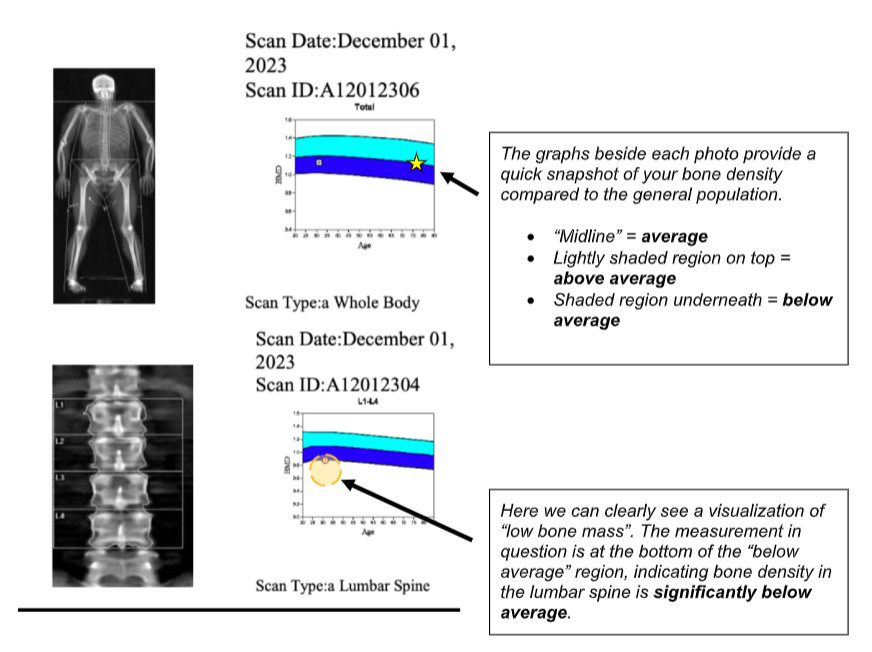
The Baseline Dual-Energy X-Ray Absorptiometry (DEXA) Scan
Because damaged villi cannot absorb calcium and Vitamin D efficiently, metabolic bone disease is an extremely common consequence of undiagnosed Celiac Disease.
According to clinical data supported by Osteoporosis Canada and the Canadian Celiac Disease Association, between 26% and 72% of adult Celiac Disease patients present with osteopenia (low bone mass) or outright osteoporosis at the time of their diagnosis.
All adults diagnosed with Celiac Disease should request a baseline DEXA scan within the first few months of diagnosis to assess bone mineral density in the hip and lumbar spine.
First-Degree Relative Screening
Celiac Disease is deeply hereditary. First-degree relatives (parents, siblings, and children) of a biopsy-confirmed Celiac Disease patient have a 1 in 10 chance of developing the condition themselves.
- Lifestyle Recommendation: Inform your immediate family members right away. They must ask their healthcare providers for a Tissue Transglutaminase IgA (tTG-IgA) blood test.
- Critical Warning: Your family members MUST NOT eliminate or reduce gluten from their diets prior to testing. Doing so will cause false-negative results, obscuring an accurate diagnosis.
Smooth Appointment Management Strategy: The Health Binder
At Phase 1, the sheer volume of lab sheets, requisition forms, and specialist waitlists can get chaotic. Buy a simple physical folder or create a dedicated digital drive. Request a printed or PDF copy of your diagnostic endoscopy report and your initial baseline bloodwork. In Canada, patient portals like MyChart make this easier, but keeping an independent record ensures you can share your history seamlessly when transitioning between your family doctor, dietitian, and GI specialist.
Phase 2: The Short-Term Calibration (Months 3 – 6)
The 3-to-6-month window is less about absolute healing and more about confirming that your lifestyle modifications are working effectively and your body’s immune response is actively calming down.
Clinical Symptom Assessment
Your medical appointments at this stage should focus heavily on tracking your symptomatic recovery. For many, classic gastrointestinal issues like chronic diarrhea, bloating, and abdominal pain begin to subside within weeks. However, systemic symptoms like profound fatigue, joint pain, peripheral neuropathy (tingling in the fingers and toes), and cognitive “brain fog” can take months to visibly improve.
The First Repeat Serology Test
Your physician will order your first post-diagnosis tTG-IgA blood panel.
- What to Expect: Do not panic if your antibody levels are still flagged as high or outside normal limits. The half-life of Celiac Disease antibodies can be quite long.
- The Clinical Goal: The target for this visit is a statistically significant downward trend compared to your diagnosis baseline. If your baseline tTG-IgA was greater than 100 U/mL, a drop down to 40 U/mL is a massive clinical win.
- Stagnant or Rising Numbers: If your antibody numbers remain unchanged or have elevated, this serves as an immediate early warning system. It means gluten is still covertly entering your system, triggering an autoimmune response.
The Nutritional Audit and Troubleshooting Visit
If your 6-month serology shows flat or climbing numbers, schedule an immediate follow-up with your Celiac Disease dietitian.
Lifestyle Recommendation: Do not view a high 6-month tTG reading as a personal failure. Cross-contamination is incredibly deceptive. Use this appointment to review overlooked sources of exposure: household toaster contamination, “may contain wheat” warnings on processed goods, restaurant cross-contact risks, or non-certified bulk bins.
Phase 3: The Critical Milestone (Year 1)
The one-year mark is the most defining milestone on your recovery path. This is where your medical team checks to see if your body has normalized its immune response and if your intestinal villi are robustly absorbing vitamins again.
-
Comprehensive Lab Evaluation (Month 12 Annual Review):
Re-test your tTG-IgA levels. In the vast majority of Celiac Disease patients who stringently maintain a gluten free journey, antibody levels should fall completely within normal reference ranges by Month 12. If levels remain elevated despite an excellent dietary history, further investigation is required. -
Nutrient Correction Verification (Adjusting Supplementation):
Repeat the exact nutrient blood panels that were flagged as deficient during your Phase 1 baseline checks. Your doctor will re-verify your Ferritin, Vitamin D3, B12, and CBC. Based on these numbers, you can safely scale back high-dose therapeutic supplements to standard daily maintenance levels under medical guidance. -
Secondary Autoimmune Screening (Thyroid & Blood Glucose Monitoring):
Run a repeat TSH test. Because thyroid disease can develop at any stage in an individual with a genetic predisposition to autoimmunity, checking this annually helps catch early-stage hypothyroidism. For patients experiencing unexplained weight variations or changes in thirst, a fasting glucose or HbA1c test may be run to screen for Type 1 Diabetes risk markers. -
Immune Status and Spleen Assessment (Vaccination Status Review):
Discuss your pneumococcal vaccination status with your general practitioner. Adults with long-standing, undiagnosed Celiac Disease can occasionally display varying degrees of hyposplenism (sub-optimal spleen function). Because the spleen plays a crucial role in fighting off specific encapsulated bacterial infections, a Pneumovax immunization or a Hepatitis B booster series is often recommended by Canadian health guidelines for optimal protection.
Smooth Appointment Management Strategy: The Lab Work Prep
When getting your annual blood work done at an outpatient lab like LifeLabs or Dynacare, always book your appointment for early morning if your doctor is checking iron, glucose, or a fasting lipid panel. Ensure you drink plenty of water the day prior to make the blood draw smooth and efficient.
Phase 4: Long-Term Surveillance & Lifestyle Maintenance (Year 2 and Beyond)
Once you cross the one-year mark with normal antibody levels and resolved symptoms, your Celiac Disease care transitions from active crisis management to low-frequency long-term maintenance. Celiac Disease is a lifelong condition, and remaining asymptomatic does not remove the necessity of regular medical oversight.
The Annual Maintenance Check-up
Every single year, schedule a dedicated Celiac Disease wellness check with your family physician. This brief appointment should include:
- A routine tTG-IgA serology test to ensure no hidden gluten exposures are occurring.
- A basic metabolic panel, CBC, and ferritin check to monitor overall health.
- A weight and nutritional status review.
The Question of a Repeat Intestinal Biopsy
A major point of discussion between patients and gastroenterologists is whether a repeat upper endoscopy and biopsy are necessary to confirm complete healing.
- The Good News: If your symptoms have fully resolved, your antibody levels have completely normalized, and your nutrient markers are optimal, Canadian clinical guidelines generally do not mandate a routine repeat biopsy. Your mucosal lining is assumed to be healing beautifully.
- When a Repeat Biopsy Is Indicated: If you reach Year 2 or 3 and continue to suffer from persistent gastrointestinal distress, weight loss, or nutrient deficiencies despite blood tests showing normal tTG-IgA levels, your GI specialist will likely schedule a repeat endoscopy. This helps differentiate between slow intestinal healing, un-diagnosed cross-contamination, or secondary conditions.
Follow-up Bone Mineral Density Tracking
If your baseline Phase 1 DEXA scan revealed osteopenia or osteoporosis, you should not wait indefinitely for a follow-up.
- The Standard Practice: A repeat DEXA scan is typically scheduled 2 to 3 years after your initial scan.
- What the Data Shows: Once the intestinal villi have healed and are capable of completely absorbing calcium, vitamin supplements, and dietary fats, bone density scores usually show a dramatic, measurable improvement. If your numbers continue to decline despite a strict gluten free diet, your physician will evaluate specialized bone-building therapies.
Troubleshooting: What If Your Symptoms or Labs Don’t Improve?
For some individuals, the journey toward healing isn’t completely linear. If you hit your 6-month or 12-month medical check-ins and find that your symptoms persist or your antibody numbers refuse to budge, your medical team will initiate a systematic troubleshooting protocol.
| Clinical Observation | Potential Underlying Cause | Next Medical Action |
|---|---|---|
| Elevated tTG-IgA at 12 months with mild symptoms | Inadvertent, ongoing dietary gluten exposure (hidden cross-contamination) | Intensive food journal review and kitchen audit with a Registered Dietitian. |
| Normal tTG-IgA but ongoing gas, bloating, and diarrhea | Secondary food intolerances due to healing intestinal walls | Temporary elimination of lactose or high-FODMAP foods under medical supervision. |
| Normal tTG-IgA but severe, unyielding GI symptoms and weight loss | Refractory Celiac Disease or concurrent Microscopic Colitis | Referral back to Gastroenterologist for a repeat upper endoscopy and colonoscopy. |
Understanding Secondary Intolerances
When your small intestine is significantly inflamed at diagnosis, the tips of the villi lose the ability to produce lactase, the essential enzyme required to break down the sugars in dairy products. Many newly diagnosed individuals mistake this temporary lactose intolerance for an inability to heal from celiac disease.
As your medical timeline progresses and your villi heal over months of strict gluten free living, your body’s natural enzyme production often returns, allowing you to comfortably reintroduce dairy into your lifestyle.
Actionable Takeaway: Your Pocket Medical Checklist
To make your upcoming medical appointments as seamless and low-stress as possible, clip, screenshot, or print out this master checklist. Take it directly to your family doctor’s office to ensure no essential baseline tests or long-term surveillance metrics are inadvertently omitted from your care routine.
[ ] PHASE 1 (Month 0 - 1)
    [ ] Secure referral to a Gastroenterologist
    [ ] Secure referral to a Celiac Disease-Specialist Registered Dietitian
    [ ] Order Baseline Lab Panel (CBC, Ferritin, D3, B12, Folate, TSH, ALT/AST)
    [ ] Requisition a Baseline DEXA Bone Density Scan (Adults)
    [ ] Arrange tTG-IgA screening for all first-degree biological relatives

[ ] PHASE 2 (Month 3 - 6)
    [ ] Order first repeat tTG-IgA test to verify a downward trend
    [ ] Schedule follow-up dietary audit to resolve lingering lifestyle issues
    [ ] Complete clinical symptom tracking sheet for your GI specialist

[ ] PHASE 3 (Month 12)
    [ ] Order annual tTG-IgA serology (Target: Full Normalization)
    [ ] Repeat deficient nutrient labs (Iron, B12, D3) to update dosages
    [ ] Re-test annual TSH thyroid markers
    [ ] Review pneumococcal and routine vaccination updates with your doctor

[ ] PHASE 4 (Year 2+)
    [ ] Book annual Celiac Disease recurring lab surveillance appointments
    [ ] Schedule a follow-up DEXA scan (if baseline bone loss was noted)
    [ ] Discuss long-term mucosal healing status with your Gastroenterologist