
Strategies for Safe, Stress-Free Gluten Free Living
Navigating life after a celiac disease diagnosis requires a fundamental shift in how you shop, cook, and think about food. When even invisible trace amounts of gluten can trigger autoimmune damage to the small intestine, spontaneity at mealtime often leads to accidental exposure or unnecessary stress. Establishing a structured gluten free meal plan is the single most effective tool for protecting your health, saving money, and regaining confidence in the kitchen.
Whether you are newly diagnosed or looking to streamline your weekly routines, building a dependable celiac meal plan transforms meal preparation from an overwhelming chore into an empowering habit. Use these practical, proven strategies to master your celiac diet menu plan and build a sustainable routine for the long term.
1. Make Meal Prep a Shared Household Effort
Managing a strict gluten free diet plan should not rest entirely on one person’s shoulders, nor should it isolate family members who require safe food. Building a sustainable home routine starts with open communication and collaboration.
- Map Out Household Favorites: Gather your family or household members and brainstorm a core list of naturally safe meals everyone loves. Tacos with 100% corn tortillas, roast chicken with root vegetables, rich chili, and rice bowls are naturally adaptable and universally enjoyed.
- Assign Specific Tasks: Involve everyone in the meal preparation workflow. Younger family members can wash fresh produce or portion snacks into containers, while older family members can assist with knife prep, recipe research, or labeling stored meals.
- Foster Inclusive Traditions: Designate thematic dinner nights like “Taco Tuesday” or “Homemade Pizza Friday” using certified safe ingredients. Themed nights simplify decision-making and create shared culinary experiences that keep everyone invested in the menu.
2. Start Small and Embrace Batch Cooking
Attempting to overhaul 21 meals and snacks simultaneously often leads to burnout. The most successful gluten free meal planning routines are built incrementally through manageable, repeatable steps.
- Target 2 to 3 Days First: Begin by planning dinner for just two or three specific weeknights. Once you master a partial schedule, gradually expand to cover the entire week.
- Double Your Portions: Whenever you cook a celiac-safe dinner, cook double the amount. Extra portions can be packed immediately for lunch the following day or frozen for nights when time is short.
- Build a Frozen Buffer: Soups, stews, casseroles, and marinated proteins freeze exceptionally well. Label every container clearly with the date and contents. Having pre-portioned, safe meals stored in your freezer provides a essential safety net against last-minute takeout risks.
3. Emphasize Whole, Naturally Gluten Free Foods
While packaged specialty items are convenient, relying exclusively on processed foods can drive up grocery bills and reduce overall nutritional density. A robust gluten free menu plan centers around vibrant, naturally safe whole ingredients.
- Prioritize Nutrient-Dense Staples: Build your dishes around fresh vegetables, fruits, lean meats, poultry, seafood, eggs, legumes, and healthy fats like olive oil and avocado.
- Explore Safe Whole Grains: Expand your carbohydrate sources beyond processed breads. Incorporate naturally safe whole grains such as quinoa, certified gluten free oats, wild rice, buckwheat, sorghum, and millet to ensure adequate dietary fiber and B-vitamin intake.
- Maintain Variety: Rotate your protein and vegetable selections weekly to prevent meal fatigue and ensure a broad spectrum of micronutrients in your celiac disease meal plan.
4. Establish Dedicated Prep Windows and Automate Basics
Consistency relies on establishing routine. Setting aside specific windows of time for menu design, grocery purchasing, and food preparation eliminates last-minute guesswork.
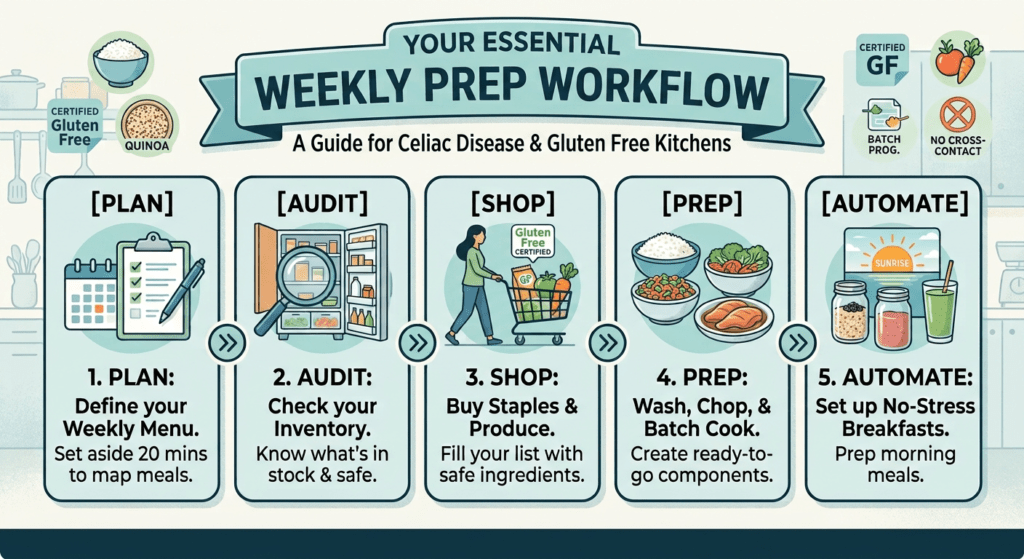
- Schedule Your Planning Time: Pick a quiet time, such as Sunday morning, to review your calendar, identify busy evenings, and write out your gluten free meal plan for a week.
- Streamline Morning Routines: Morning rush hours are notoriously stressful. Automate your breakfasts with quick, safe options like overnight certified oats, chia seed puddings, pre-portioned smoothie packs, or hard-boiled eggs paired with fresh fruit.
- Batch Prep Ingredients: Dedicate one hour after grocery shopping to wash and chop fresh vegetables, marinate proteins, and boil a large batch of rice or quinoa. Having ready-to-cook components drastically cuts down weeknight active cooking time.
5. Stock a Reliable Gluten Free Pantry
A well-stocked pantry is your primary defense against cross-contamination and unexpected hunger. Having quick-prep staples readily available makes executed meal plans for celiac disease simple and affordable.
- Buy Certified Staples in Bulk: Stock up on basic staples like dried beans, rice, gluten free tamari, canned tomatoes, spices, and certified flours. Buying pantry staples in bulk reduces the frequency of store visits and lowers overall costs.
- Audit Labels Regularly: Always check ingredient labels, even on products you purchase frequently, as manufacturer formulations can change without notice. Look for explicit “Certified Gluten Free” seals to ensure safety from facility cross-contact.
- Explore Online Specialty Ordering: If your local grocery store has a limited selection of specialty items, utilize online subscription services or direct manufacturer stores to source pantry necessities reliably.
6. Secure Storage and Prevent Cross-Contamination
When managing celiac disease, how you store and handle food is just as critical as the ingredients you buy. Cross-contamination in shared kitchens can silently compromise your health.
- Invest in Dedicated Storage: Use glass or food-safe plastic containers with airtight lids in various sizes. Clear containers allow you to see leftovers easily, reducing food waste.
- Establish Safe Kitchen Zones: If living in a shared kitchen, store all gluten free items on the top shelves of the pantry and refrigerator to prevent crumbs from falling into safe food.
- Label Everything Clearly: Mark all gluten free containers, cutting boards, and cooking utensils clearly. Maintain dedicated color-coded items, or entirely separate appliances like dedicated gluten free toasters and air fryers, to maintain absolute safety.
By sticking to these fundamental principles, maintaining a healthy gluten free meal plan shifts from a stressful medical requirement to a smooth, organized daily lifestyle.
Frequently Asked Questions
It is best to plan your menu 1 to 2 days before your primary grocery shopping trip. Most people find that planning on Friday or Saturday and shopping on Sunday allows them to enter the workweek fully prepared with all necessary ingredients on hand.
No. Wheat, barley, rye, triticale, and non-certified oats are not safe for individuals with celiac disease. However, naturally gluten free grains like rice, quinoa, millet, sorghum, amaranth, and buckwheat are excellent, safe options. Always ensure grains are explicitly labeled certified gluten free to avoid agricultural cross-contact.
Specialty replacement foods (like breads, cookies, and pre-made meals) are often expensive. To minimize costs, build the core of your celiac diet menu plan around naturally gluten free whole foods such as eggs, beans, rice, seasonal vegetables, and chicken. Buy staples in bulk and utilize batch-cooking strategies to make your food stretch further.
Preventing cross-contamination requires physical separation. Store gluten free items on upper shelves, use separate color-coded cutting boards, maintain dedicated condiments (such as butter jars and peanut butter to prevent knife-crumb contamination), and utilize a separate toaster exclusively for gluten free bread.
Yes. Because a celiac disease meal plan focuses primarily on eliminating gluten containing grains, it can easily be tailored to accommodate dairy-free, low-FODMAP, nut-free, or vegetarian diets by swapping protein and grain sources accordingly.
Keep a few non-perishable or long-shelf-life safe options in your pantry and freezer at all times. Frozen leftovers from prior batch-cooking sessions, canned soups labeled gluten free, or simple egg-and-vegetable scrambles can serve as quick, safe alternatives when your daily schedule is disrupted.